

Words from Programme Director

Master of Family Wealth Management
Led by an outstanding team of visionaries and experts, the Master of Family Wealth Management programme offered by HKU Business School and the Hong Kong Institute for the Humanities and Social Sciences dives deep into the historical roots, cultural dimensions, and cutting-edge strategies of family wealth.
As the first of its kind in Hong Kong, this degree is your gateway to the dynamic world of family wealth management. The programme offers an interdisciplinary mix of skills and knowledge which will help students develop the soft and hard competencies required in family wealth management. Graduates will be well-equipped to embark on a successful career as family wealth managers, whether as professionals in the field or as integral members of their own family legacy.
Welcome to the Master of Family Wealth Management (MFWM) Programme at HKU Business School. Below are the 5 most frequently asked questions by our applicants and we have them answered by Ms. Leung for you to catch a glimpse of the MFWM Programme.
Family wealth management is a multifaceted endeavor that extends beyond financial transactions and balance sheets. It involves a comprehensive understanding of familial dynamics, values, and the intricate tapestry of history woven through generations. History plays a pivotal role in shaping the approach to wealth management within families, influencing decision-making processes, values transmission, and the preservation of legacy. Therefore, historical lessons enable family managers today to understand the present and plan for the future.
The wealth management industry saw strong growth in recent decades, and despite greater market uncertainty in the last few years, demand for professionals to manage wealth continues to grow. In particular, families are increasingly seeking advice on how to holistically manage their wealth, business and legacy. While there are many finance and accounting postgraduate programmes in Hong Kong and the region, the Master of Family Wealth Management degree at HKU fills a gap in specialized knowledge that caters to the unique needs of family offices, high-net-worth families and private wealth management.
The programme is suitable for a wide range of prospective students. Potential student profiles may include, but not limited to recent university graduates looking to complement their undergraduate majors with more well-rounded post-graduate studies; early career professionals looking to expand horizons or upgrade skills; and, younger members of families seeking insights on family wealth management, succession planning, family business development, and governance. At the heart, the programme caters to those who are passionate about family wealth management and managing family office, regardless of their prior education and work.
Annual intake for the Master of Family Wealth Management programme is limited, and further organised into smaller pods for class discussions and collaboration. This will enable the class to foster a strong sense of fellowship, enriching the graduates’ life-long experience and enhancing their future professional network. The curriculum prioritises teamwork through a compulsory retreat at the start of the programme and coursework throughout the year, building a strong bond amongst students. Students will also be encouraged to self-organise other extracurricular activities to further class camaraderie.
HKU Business School offers a few specialised master's programmes to meet the evolving talent needs of the dynamic financial industry.
MFWM takes an interdisciplinary approach, focusing on family history and business, the history of wealth and financial markets, estate planning, and family office management.
MWM provides a comprehensive education in financial instruments, investment strategies, and soft skills specifically tailored for the wealth management industry.
The curricula and academic focuses of the two programmes are distinct, with less than one third of the courses covering overlapping topics. Additionally, these curricula have minimal overlap with the Master of Finance programme.
Our Faculty
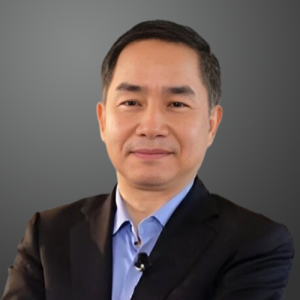
Institute Director
Ph.D., M.A., M.Phil., Yale University
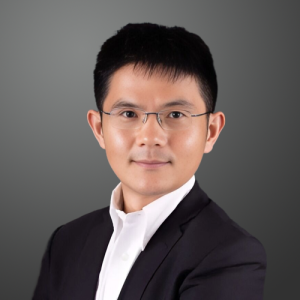
Associate Dean (Research and Knowledge Exchange)
Ph.D., Yale University, 2008

MFWM Programme Director
Professor of Practice

Ph.D., M. Phil., Hong Kong University of Science and Technology

BA, Ph.D Cantab; FRHistS

Ph.D., Ecole Pratique des Hautes Etudes

Ph.D., Harvard University
Curriculum Structure
*Not all of the courses listed above will necessarily be offered each year and the above list is subject to further adjustments.
This course provides a historical overview of the evolution of financial markets. Students will examine, compare and contrast the origins of securitisation and the gradual spread of credit, banking, and investment instruments across different regions of the world. Students will investigate the role of key historical events and figures in shaping financial markets and the impact of globalisation and technological advancements on family wealth management, exploring the historical origins of financial crises and the effects of financial policies on society. In addition, students will acquire an understanding of the ethical implications of family wealth management and financial practices from a historical perspective to make informed decisions about financial practices.
This course investigates the economic, social, and cultural history of societies from the lens of family structures around the world. Through in-depth case studies and discussions of historical family organisation and structure, students will gain insights into the factors that have influenced the rise and fall of family businesses. These factors include the complex relationships between family dynamics, business practices, inheritance laws, leadership and governance, succession planning, and cultural traditions, among others, and how they have influenced the broader economic landscape.
This course offers a comprehensive understanding of the principles and practices of asset allocation and investment management for high-net-worth individuals and family businesses, covering key topics such as portfolio design, risk management, performance evaluation, and other critical aspects of investment management that are essential for family wealth professionals. Students will learn how to develop and implement sustainable, responsible, and impact investing strategies that align with individual investors' and family offices' goals and risk tolerance. Students will also gain practical skills and knowledge to manage assets and minimise risk while maximising returns. Assessment: 100% coursework
This course emphasises the modern fundamentals of corporate financial decision-making, focusing on investment, financing, and dividend distribution with a specific reference to family businesses. Building upon introductory courses in accounting, economics, and quantitative analysis, this course develops distinct conceptual frameworks and specialised tools for solving real-world financial problems at both the individual and corporate levels. The course covers specific topics such as financial mathematics, security valuation, techniques for capital investment decisions, financial decision-making under uncertainties (portfolio theory and capital market theory), corporate capital structure, cost of capital, dividend decision, and policy. Additionally, the course will cover business models that are relevant to family businesses.
This course examines the legal and financial aspects of estate planning. It provides an extensive exploration of the different legal know-how and strategies used for managing and transferring assets, including wills, trusts, and powers of attorney. The course also covers critical aspects such as tax implications, philanthropy, and other essential considerations for preserving and transferring wealth. Through classroom discussions and case studies, students will gain the expertise and skills to provide sound advice to families on complex wealth management matters.
This course covers essential aspects of managing family offices for high-net-worth individuals. It explores key topics such as wealth planning, investment management, tax planning, governance, risk management, and philanthropy. It aims to equip students with the expertise to manage family offices and offer tailored solutions to families. Additionally, the course examines the unique challenges and opportunities that family offices face in the current economic and business landscape. Students will acquire practical skills and knowledge to tackle the intricate issues that family offices confront, enabling them to excel in their roles.
Course Exemption
Courses exemption for MFWM7003 and MFWM7004, may be granted (normally by examination) if candidates:
1. Can produce evidence, such as transcript and course syllabus, that a course is equivalent in content to another course taken elsewhere for which a satisfactory grade has been obtained; or
2. Are holding relevant professional qualifications which were obtained before admission to the curriculum.
No credits will be given for the exempted course and candidates shall be required to take an approved alternative course of the same credit value.
Applications for course exemption are subject to the approval of the Master of Family Wealth Management Programme Director and committees concerned.
**Not all of the elective courses listed below will necessarily be offered each year, and the below list is subject to further adjustments.
^MFWM students may take up to two elective courses outside the MFWM programme:
- A maximum of two 6-credit electives from the taught postgraduate curricula offered by the Faculty of Business and Economics may be allowed under the advice and approval of the Programme Directors concerned.
- Alternatively, MFWM students may take one of the two outside electives from the Master of Social Sciences in the field of Nonprofit Management. The selection of cross-listed courses shall be subject to the approval of the Programme Director/Chair of the two respective programmes.
*Not all of the courses listed above will necessarily be offered each year and the above list is subject to further adjustments.
The Pre-Capstone course introduces students to concepts, knowledge, and skills that are critical for completing the Capstone project (MFWM8012) and eventually executing family wealth management in practice. The course includes thematic workshops and self-reflection. Participation in the workshops is compulsory and critical because the majority of the course is delivered through experiential learning.
The compulsory capstone project is designed to provide students with an opportunity to conduct research in groups and propose possible solutions to a contemporary issue faced by family offices and wealth managers. The main objective of this course is to help students gain a comprehensive understanding of research and analysis and develop research and analysis skills in a selected area of family wealth management. Students can address and propose possible solutions to a contemporary issue in family wealth management in the Guangdong–Hong Kong–Macao Greater Bay Area. This course serves to develop analytic, critical thinking, problem-solving, and presentation skills that will contribute directly to effective family wealth management. The capstone project can also be an internship experience, subject to the approval of the Programme Director/ of the programme. Throughout the course, students will receive guidance from experienced faculty and/or professional practitioners.
IHSS
The Hong Kong Institute for the Humanities and Social Sciences (IHSS) is dedicated to promoting innovative, multidisciplinary, and interdisciplinary research and teaching within the humanities and social sciences with a particular focus on China. The Institute aims to serve as a vibrant hub for exploring the multifaceted aspects of Chinese civilization and its extensive developmental history, employing both traditional and contemporary approaches.
IHSS research is currently grouped into five major themes:
- Quantitative History (QH)
- Chinese Business History (CBH)
- Asian Religious Connections (ASIAR)
- Delta on the Move: The Becoming of the Greater Bay Region, 1700 – 2000 (DotM)
- Early Chinese History and Archaeology (ECHA)
Please click here to visit the IHSS website for more information.
Please click here learn more about the Master of Family Wealth Management (MFWM) Programme.
Class Profile
Sample List of Previous Employers
- Amazon
- Bank of China
- China International Capital Corporation (CICC)
- China Merchants
- CITIC Securities
- Futu
- Global 70 Multi-Family Office
- Guotai Haitong Securities
- Hang Seng Bank
- iQIYI, Inc.
- JIG Family Office Group
- PricewaterCoopers
- Roland Berger Management Consulting
- Sinolink Securities Co., Ltd.
- Tencent
- TikTok (China)
- Unipec UK Company Limitied
- William Buck Wealth Advisors




Career Outcomes
Class of 2025 Graduate Employment Data Summary: Master of Family Wealth Management
- China Everbright Bank
- CICC
- HSBC
- Société Générale
- China CITIC Bank
- Agricultural Bank of China
- JD.com
- Tencent
- Ping An Group