
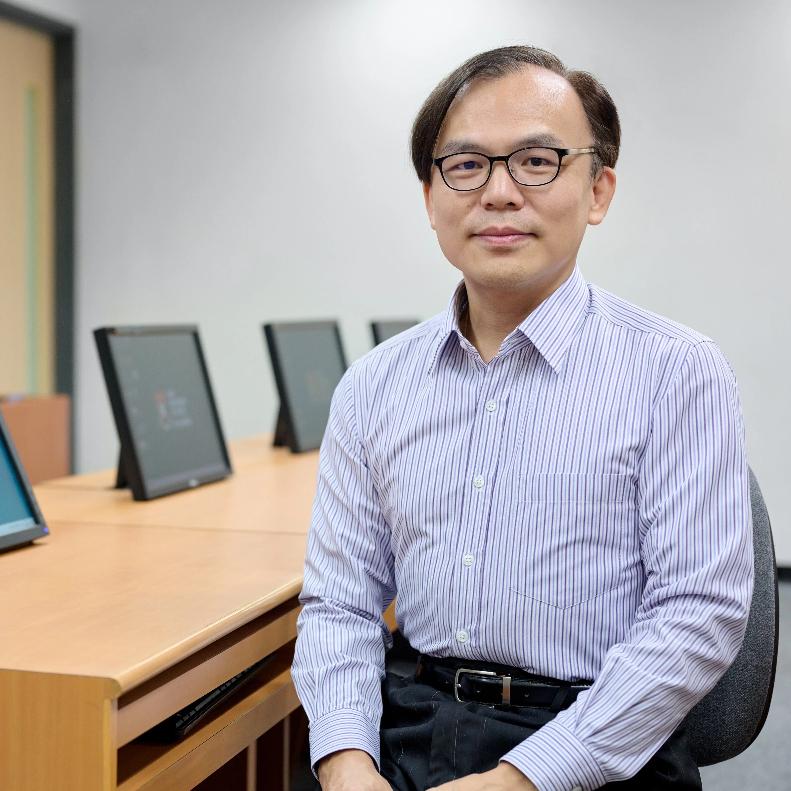
Words from Programme Director
Master of Artificial Intelligence in Business
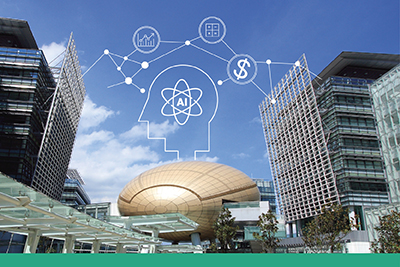
The Master of Artificial Intelligence in Business Programme is designed to equip students with specialised knowledge and skills to develop strategies and manage the planning, design, and implementation of artificial intelligence in organisations. The programme explores the opportunities and challenges AI brings to businesses and the responsible management of AI in a corporate setting.
4 frequently asked questions about the Master of Artificial Intelligence in Business Programme, answered by our Programme Director.
The programme combines multiple disciplines, including business, finance, information systems, management, strategy, law and ethics, to equip students with a well-rounded understanding of AI management. This interdisciplinary approach enables students to devise innovative AI management solutions and strategies while incorporating diverse perspectives and expertise.
Our Faculty

MAIB Programme Director

Area Head of Innovation and Information Management (effective September 1, 2026)

Ph.D., LMU Munich

Ph.D., Notre Dame

Ph.D., Stern School of Business, New York University, United States
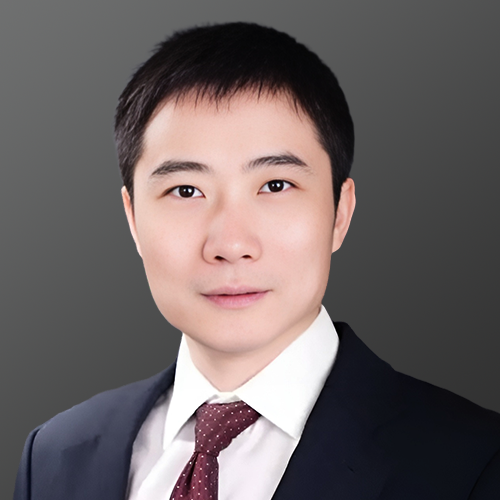
Professor of Innovation and Information Management

Ph.D., Masschusetts Institute of Technology, United States

DBA, Harvard Business School, United States

PhD., Marshall School of Business, University of Southern California, United States

Ph.D., London Business School

MSc(BA) Programme Director

Ph.D., Northwestern University, United States

Ph.D., University of Southern California

Ph.D., University of Utah, United States

Ph.D., UCLA

MFFinTech Programme Director

Ph.D., Ross School of Business, University of Michigan, United States

Ph.D, HK
Senior Lecturer

Adjunct Professor

Ph.D., University of North Carolina, Chapel Hill, United States

Senior Lecturer

Ph.D., Princeton University, United States
Curriculum Structure
The HKU MAIB Programme admits students from diverse backgrounds, cultivating a vibrant and intellectually rich learning community. To ensure that all students embark their studies with a strong foundation, the Programme offers an optional Boot Camp providing a common platform of essential knowledge and skills.
Highly recommended for all incoming MAIB students, the Boot Camp consists of 27 hours of teaching and will be held prior to the commencement of the first academic module. The course covers the following components:
- Python Programming (12 hours)
- Generative and Agentic AI Workshops (12 hours)
- Business Consulting (3 hours)
Course Exemption
Up to two required courses, except the capstone course, may be granted (normally by examination) if candidates:
1. Can produce evidence, such as transcript and course syllabus, that a course is equivalent in content to another course taken elsewhere in which a satisfactory grade has been obtained; or
2. Are holding relevant professional qualifications which were obtained before admission to the curriculum.
No credits will be given for the exempted course and candidates shall be required to take an approved alternative course of the same credit value.
Applications for course exemption are subject to the approval of the Master of Artificial Intelligence in Business Programme Director and committees concerned.
Remark: Not all the courses listed will necessarily be offered each academic year and the listed courses are subject to further adjustments.
This course focuses on the applications of artificial intelligence (AI) in business. Students will learn how various AI techniques can be applied to solve real-world problems in business and economics, such as market analysis, customer relationship management, human resources management, robo-advisors, algorithmic trading, risk management, and economic predictions. Multiple case studies will be used to illustrate how AI can be used to create value in business and solve real world problems. The challenges and concerns in using AI will also be discussed.
This course offers an introduction to the fundamentals of artificial intelligence. It aims to provide students with foundational knowledge in artificial intelligence models and technologies, including the definition of artificial intelligence, theoretical foundations of artificial intelligence, artificial intelligence models and techniques, and their limitations. Students will acquire hands-on experience in designing and developing models using artificial intelligence and machine learning.
This course aims to equip students with a solid understanding of the important role of artificial intelligence (AI) revolution in today’s global business environment. As AI and digital platforms transform the nature of business and organizational structure across a wide range of industries, mastering the concepts and practices of AI transformation is crucial for managers, entrepreneurs as well as investors. Through disciplined analyses of successful and unsuccessful cases across industry and national borders, this course will provide students with the sophistication to identify, evaluate, and act upon new business opportunities successfully in the global business environment in the AI era.
This course focuses on the responsible use of artificial intelligence (AI). It discusses issues such as ethics, fairness, transparency, accountability, and safety associated with the use of AI. It also covers the laws and regulations governing the use of AI both locally and globally and the relevant compliance considerations. Some frameworks and best practices will be introduced. Students are expected to analyze various business cases and business applications and discuss the legal, risk, and ethical issues involved.
OR
Regulating artificial intelligence (AI) and digital platforms creates many new challenges for organizations. AI till date have not been rigorously regulated (with exception of the EU’s AI Act), this means users are exposed to risks. This exposes organizations and decision makers to more ambiguity. As such, how AI is being governed by organizations does matter. Likewise digital platforms transform laws are evolving and adapt to changes in providing consumer protection. This course will explore two core technological developments: first is the human-AI nexus of governance and second is the interplay between consumer protection and digital platforms. Whilst much of the laws in these areas are evolving, it is important for organizations to have sufficiently robust responsible governance and risk management framework to minimize exposures to regulatory infringements, reputational damage, and harms upon individuals, organizations, and society at large. To achieve this, the course takes an interdisciplinary approach combining laws and regulations, business perspectives, and ethics.
The course builds on top of the Fundamentals of AI course and studies some more advanced concepts and knowledge of machine learning and deep learning. Besides basic machine learning models, it will cover ensemble learning and deep neural networks such as convolutional neural networks, recurrent neural networks, transformers and attention mechanisms, generative adversarial networks, and deep reinforcement learning. Students can learn the theory and practical skills involved in the design and implementation of these machine learning and deep learning models. The strengths and weaknesses of each method will be discussed. In addition, students will learn how to evaluate the performance of different types of models and choose the appropriate models in different scenarios.
Course Exemption
Up to two required courses, except the capstone course, may be granted (normally by examination) if candidates:
1. Can produce evidence, such as transcript and course syllabus, that a course is equivalent in content to another course taken elsewhere in which a satisfactory grade has been obtained; or
2. Are holding relevant professional qualifications which were obtained before admission to the curriculum.
No credits will be given for the exempted course and candidates shall be required to take an approved alternative course of the same credit value.
Applications for course exemption are subject to the approval of the Master of Artificial Intelligence in Business Programme Director and committees concerned.
Remark: Not all the courses listed will necessarily be offered each academic year and the listed courses are subject to further adjustments.
This course is designed to provide the foundational knowledge and real experience of applying machine learning to economics forecasting. The course aims to help students understand how to apply AI and machine learning models in microeconomics and macroeconomics.
The primary focus of this course is to explore the integration and application of artificial intelligence(AI) technologies within the accounting profession. As the field of accounting continues to evolve with the rapid advancements in technology, AI has become a crucial component in streamlining and enhancing various accounting processes. This course aims to equip students with the necessary knowledge and skills to harness the potential of AI in the accounting landscape effectively. Throughout the course, students will gain insights into the fundamentals of artificial intelligence and its implications on accounting functions. By examining real-world case studies and engaging in hands-on exercises, students will develop a comprehensive understanding of how AI-driven tools can improve efficiency, reduce human error, and facilitate decision-making in the accounting profession.
The course explores the issues involved in effective management and leadership in a global business setting in the AI era. A focus of this course will be on how individuals, groups and organizational contexts would impact effectiveness, efficiency, and success of organizations dealing with AI. The main objective is to help students acquire perspectives of how individuals, teams and the entire organization would behave with the advances in AI and the presence of robots.
This course focuses on the application of artificial intelligence (AI) in marketing and studies how AI can be leveraged to optimize marketing campaigns, enhance customer engagement, and drive business growth. Students will learn how to use AI tools and algorithms to analyse consumer behaviour, 6 personalize marketing content, and predict trends in the market. Through case studies and practical exercises, participants will gain the skills and knowledge needed to harness the power of AI in the field of marketing.
Note: This course is not open to candidates who have taken or are taking MSMK7044.
This course explores the intersection of finance, technology, and artificial intelligence. It studies how advanced technologies, such as machine learning, natural language processing, data analytics, blockchains, and cryptocurrencies, are revolutionizing the financial industry. Students will learn about the applications of information technologies and AI in areas such as algorithmic trading, blockchains and cryptocurrencies, fraud detection, robo-advisor, and customer service. Additionally, the course covers the ethical and regulatory considerations associated with the adoption of information technologies and AI in the financial sector.
This course provides a comprehensive introduction to generative artificial intelligence (AI) and its applications in business contexts. Students will learn about the evolution and background of generative AI, in the context of decision-making, explore the various applications of generative AI in different business contexts, and examine the risks and opportunities associated with its use. In addition, students will investigate the importance of the use of prompts and strategies for prompt engineering in enhancing the performance and output quality of generative AI models. Through hands-on training, students will develop practical skills in designing effective prompts, fine-tuning models, and optimizing generative AI.
This course is designed to provide students with the essential knowledge for managing AI projects and products in real business situations. The course will include an overview of project management and product management principles and methodologies, with a specific focus on AI-related projects and products. Students will understand the different stages of an AI project from planning and design to development, testing, deployment, maintenance, with an emphasis on the management of cost, stakeholders, and risk. At the same time, students will learn the different aspects involved in AI product development, such as market research, product strategy, design, and pricing strategy. Contemporary project and product management methodologies will be introduced.
This course focuses on the applications of artificial intelligence in modern manufacturing management and operations management. The course will look at examples of how AI are applied in the manufacturing and operations management in real-world businesses. Examples of topics include AI and robotics in manufacturing and design, AI in logistic management, demand forecasting and inventory optimization, intelligent factory operations and Internet of Things, AI in supply chain management, predictive maintenance, and digital design and simulation.
This course explores the dynamic interplay between humans and artificial intelligence systems. Throughout the course, students will engage with a blend of theoretical foundations and practical applications, gaining insights into the cognitive, social, technical, and ethical dimensions of human-AI interaction and collaboration. Key topics include user-centred design for AI, human factors in AI systems, interactive machine learning, explainable AI, human-robots interaction and collaboration, and the role of AI in augmenting human capabilities.
This course is designed to equip students with the knowledge and skills necessary to excel in the dynamic field of management consulting in the age of AI. This course provides an in-depth understanding of the consulting industry, methodologies, tools, and strategies used by top consulting firms to solve complex business problems and drive organizational success using AI. Throughout the course, students will learn about the consulting process from the initial client engagement to the delivery of actionable solutions. They will explore various consulting frameworks, analytical tools, and best practices used in the industry with a focus on AI. Additionally, the course emphasizes the development of critical thinking, problem-solving, and communication skills essential for a successful career in management consulting.
This course aims to provide students with an opportunity acquire advanced programming skills using the Python language. Students will learn how to use various Python libraries to implement AI applications, such as chatbots, natural language processing, and image and facial recognition. Students will acquire hands-on experience in designing and developing AI applications and the relevant models behind these applications.
This course provides a comprehensive examination of China’s business environment and the intricate capital markets. China's capital markets have undergone a remarkable transformation over the past few decades, transitioning from a closed system to one that is increasingly integrated with global financial markets. The first part of this course guides students to explore China's economic policy framework, analyzing the design, implementation, and outcomes of key policy initiatives that have shaped the business environment of the world's second-largest economy. The second part of this course leads students to study the practical aspects of China's capital markets, including the stock and bond markets, the banking system, the investment with commodity and currency, the derivatives markets, and corporate governance issues in China. Students will gain valuable insights into the unique characteristics that shape China's financial markets, institutions, and regulatory frameworks. Students will engage in case studies, group discussions, and individual assignments to deepen their understanding of the complexities involved in navigating the Chinese financial system. The course aims to empower students to develop their own analytical frameworks for assessing financial opportunities and challenges in China, equipping them for successful careers.
This course introduces artificial intelligence from a managerial, organizational, and applied perspective, with particular emphasis on its implications for business strategy, innovation, and entrepreneurship. It helps students build a practical understanding of AI concepts, tools, capabilities, and limitations, and then moves to the application of AI across business functions, industries, startups, and enterprise settings. The course is organized into topics across six modules: AI foundations and literacy; AI tools, workflows, and product logic; functional and industry applications; AI strategy and business model innovation; work redesign, organization, and leadership; and AI ethics, governance, risk, and future careers. This course does not focus on the technical details or theoretical aspects of AI. Instead, this course places particular emphasis on how AI is reshaping competitive advantage, business models, innovation pathways, venture creation, work design, and the capabilities required of future founders, managers, and professionals. Rather than training students to build AI systems themselves, the course prepares them to identify AI-enabled opportunities, evaluate new venture ideas, understand how AI can be embedded into products and workflows, and participate in AI-driven business transformation in future professional settings.
This course provides HKU Master’s students with a comprehensive and academically grounded understanding of global business environments, with a particular focus on Europe as a complex institutional, regulatory, and innovation-driven context. Anchored in Barcelona, the course integrates institutional analysis with applied learning in multinational and cross-cultural settings. Experiential learning is central to the course design, with company visits (e.g., leading technology firms, multinational corporations, and international firms operating in Europe), practitioner-led sessions, and interactive workshops forming a core part of the learning experience.
This course prepares HKU Master’s students to analyze, design, and develop AI-enabled ventures across startup and corporate contexts. It integrates strategic, analytical, and managerial frameworks with hands-on project work, enabling students to identify high-impact opportunities, design AI-native products, and construct evidence-based investment cases. Set within the broader transformation of business driven by artificial intelligence, the course emphasizes an “AI-first” approach to value creation, competitive strategy, and organizational innovation, with consideration of ethical and regulatory implications in global markets. Structured around key stages of the AI venture lifecycle — opportunity identification, product and system design, and investment readiness — the course combines conceptual learning with applied team projects, including no-code prototyping and venture development. Project scope is calibrated to ensure feasibility within the course duration. By the end of the course, students will have developed a functional prototype and a well-supported venture proposal.
You can take up to two electives from the Master of Accounting, Master of Accounting Analytics, Master of Economics, Master of Finance, Master of Finance in Financial Technology, Master of Global Management, Master of Science in Business Analytics, Master of Science in Marketing, Master of Sustainable Accounting and Finance, or Master of Wealth Management programme at HKU. Enrollment in electives from other programmes is subject to seat availability and approval by the Programme Directors concerned based on your profile, capabilities and performance in the MAIB programme.
*The list of available electives from other programmes may have prerequisite requirement(s) and is subject to change for future intakes.
Remarks:
Up to two elective courses may be taken from other taught postgraduate programmes offered by the School, subject to availability and review by the Programme Director based on students’ profile, capabilities, and performance in the Master of Artificial Intelligence in Business programme.
Remark: Not all the courses listed will necessarily be offered each academic year and the listed courses are subject to further adjustments.
This course focuses on the intersection of AI, business, and creativity to develop entrepreneurial skills and strategies for creating and launching innovative AI-based ventures. Students will learn how to identify market opportunities, develop business models, secure funding, and navigate the challenges of starting and growing a AI-focused business. The course covers topics such as idea generation, product development, market research, intellectual property protection, marketing strategies, financial management, and pitching to investors. Students will have the opportunity to integrate and apply what they have learned in the programme in a project. They will develop a business plan which will be presented to potential investors.
This course aims at bridging academic learning with real-world applications, equipping students for their future careers through practical problem-solving. This course allows students to integrate and apply the knowledge and techniques that they have learned in previous courses in a business project. Teams of students will carry out business projects using real-world data and have the opportunity to be involved in different stages in a business project, including project planning and management, strategy setting, model building, data analysis and interpretation, and result presentation. In the process, students will become familiar with the use of analytics tools and managerial skills in business projects. This course will provide a dynamic and student-centered experience that fosters real-world engagement and career readiness.
You can take up to two electives from the Master of Accounting Analytics, Master of Artificial Intelligence in Business, Master of Economics, Master of Finance, Master of Finance in Financial Technology, Master of Global Management, Master of Science in Business Analytics, Master of Science in Marketing, Master of Sustainable Accounting and Finance, or Master of Wealth Management programme at HKU. Enrollment in electives from other programmes is subject to seat availability and approval by the Programme Directors concerned based on your profile, capabilities and performance in the MAcct programme.
Since enrollment in other taught postgraduate electives is not guaranteed, you should always choose four MAcct electives during the course enrollment in our programme. Course enrollment results of other programmes may only be confirmed after that course has started. If your enrollment is successful, you can drop the MAcct elective(s) and enroll in the other taught postgraduate elective(s).
It is your responsibility to make sure you obtain 72 credits to fulfill the graduation requirements and there is no overlapping of classes and exams in courses from different programmes.
*The list of available electives from other programmes may have prerequisite requirement(s) and is subject to change for future intakes.
Class Profile
Sample List of Previous Employers
- Accenture
- AIA Group Limited
- Bank of China
- ByteDance
- CCTV
- Changjiang Securities
- CITIC Securities
- Deloitte
- GF Securities
- Goldman Sachs
- HKT Limited
- iFLYTEK
- Industrial and Commercial Bank of China
- JD.com
- Kantar Group
- Kuaishou
- Meituan
- Procter & Gamble
- Tencent
- Xiaohongshu