



Words from Programme Director

Master of Finance in Financial Technology
Welcome to the Master of Finance in Fincanical Technology Programme at HKU Business School. Below are the 5 questions from our candiates that answered by Prof. Kwan for you to catch a glimpse of the MFFinTech Programme.
Led by the HKU Business School, the Master of Finance in FinTech programme features a strong multidisciplinary training, with courses jointly offered by the School of Computing and Data Science and the Faculty of Law. Students are able to acquire cutting-edge technical skills and a broad understanding of potential legal, economic and societal impacts of FinTech and digitalisation.
The programme is designed for those who are interested in the financial technology sector, as they would learn new competencies in new technologies such as big data, artificial intelligence and blockchain, etc. Students with computer science, engineering, mathematics, physics, statistics or science and technology related disciplines are preferred, but above all else, a willingness to learn whatever one’s initial background. Many students without technical backgrounds are highly successful in the program. Graduates are expected to be technologically adept, business savvy and able to offer innovative solutions to finance-related industries.
Carving out as a standalone program allows us to provide a more comprehensive and tailored program to our students. This new program builds upon our previous Master of Finance FinTech stream, but brings in the expertise of the Faculty of Engineering and Faculty of Law, allowing us to special course offerings. The curriculum of this Master Programme enhances the learning experience, allowing our graduates to be more well-rounded in skills and expertise.
The Master of Finance in FinTech gives students much of the same holistic knowledge of finance, but in terms of technical skills, focuses on those that FinTech jobs specifically require. The emphasis is on quantitative and analytical skills as well as practical experience, by employing technological innovations in financial practices.
The financial sector is evolving rapidly in the digital age. We like to think of this program as appropriate for both students who want to enter traditional financial jobs but with extra technical skills as well as the fintech or technology industry. While many of our students do aspire to become quant researchers, data scientists or enter technical roles, many of our students enter traditional finance jobs as well. The onslaught of data and powerful computing power demands new thinking and continuous innovation and affects all financial institutions, both incumbents and entrants. FinTech startups and established companies have to adopt new ways of thinking and anticipate what will come next in response to this technology evolution. FinTech skills are in high demand.
Our Faculty

Adjunct Associate Professor, PwC FinTech & Crypto Leader for Asia and Chairman of the FinTech Association of Hong Kong

Ph.D., Vienna Graduate School of Finance (WU Vienna), Austria

PhD., The Wharton School, University of Pennsylvania, United States

Honorary Professor

Adjunct Professor

Ph.D., London School of Economics, England

MFFinTech Programme Director

Ph.D., London School of Economics, United Kingdom

Ph.D., Massachusetts Institute of Technology, United States

Ph.D., Masschusetts Institute of Technology, United States

Ph.D., Fuqua School of Business, Duke University, United States

Ph.D., University of North Carolina, Chapel Hill, United States

MSAF Programme Director

Ph.D. in Finance, Michigan State University, United States

Ph.D., University of British Columbia, Canada

Ph.D. in Finance, The Wharton School, University of Pennsylvania, United States

Ph.D., Harvard University, United States

Ph.D. in Engineering Systems, Massachusetts Institute of Technology, United States




Associate Dean (Research and Knowledge Exchange)
Ph.D., Yale University, 2008
Curriculum Structure
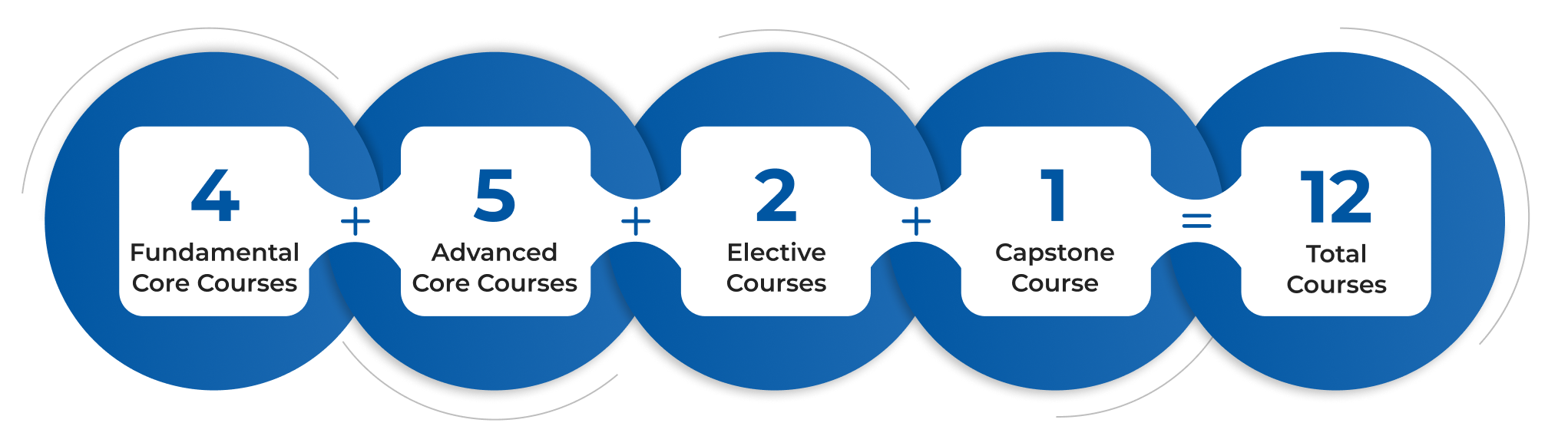
Remark: Not all of the courses listed will necessarily be offered each year and the listed courses are subject to further adjustments.
Course Exemption
Course exemption of up to two required courses, except the capstone course, may be granted (normally by examination) if candidates:
1. Produce evidence, such as a transcript and course syllabus, that a course is equivalent in content to another course taken elsewhere for which a satisfactory grade has been obtained, or
2. Are holding relevant professional qualifications which were obtained before admission to the programme.
No credits will be given for the exempted course and candidates shall be required to take an approved alternative course of the same credit value.
Advanced Standing
Advanced standing of up to two required courses, except the capstone course, may be granted if:
1. The course is completed at a graduate, postgraduate or master level from a recognized programme elsewhere within the last four years before admission to the programme and a good grade in the course was achieved, or
2. The candidate possesses a relevant professional qualification which was obtained before admission to the programme.
In such cases, no replacement courses will be required and the tuition fees will be adjusted accordingly.
Applications for course exemption and advanced standing are subject to the approval of the Master of Finance in Financial Technology Programme Director and committees concerned.
*Remarks: Students who have successfully completed Level II or above of the CFA examination can be granted Advanced Standing and/ or Course Exemption of two of the Fundamental Core Courses. Students who have obtained other professional qualifications, including but not limited to ACCA, CGA, CPA, FRM and PRM, can also apply to be exempted from certain core courses.
Course Exemption
Course exemption of up to two required courses, except the capstone course, may be granted (normally by examination) if candidates:
1. Produce evidence, such as a transcript and course syllabus, that a course is equivalent in content to another course taken elsewhere for which a satisfactory grade has been obtained, or
2. Are holding relevant professional qualifications which were obtained before admission to the programme.
No credits will be given for the exempted course and candidates shall be required to take an approved alternative course of the same credit value.
Advanced Standing
Advanced standing of up to two required courses, except the capstone course, may be granted if:
1. The course is completed at a graduate, postgraduate or master level from a recognized programme elsewhere within the last four years before admission to the programme and a good grade in the course was achieved, or
2. The candidate possesses a relevant professional qualification which was obtained before admission to the programme.
In such cases, no replacement courses will be required and the tuition fees will be adjusted accordingly.
Applications for course exemption and advanced standing are subject to the approval of the Master of Finance in Financial Technology Programme Director and committees concerned.
*Remarks: Students who have successfully completed Level II or above of the CFA examination can be granted Advanced Standing and/ or Course Exemption of two of the Fundamental Core Courses. Students who have obtained other professional qualifications, including but not limited to ACCA, CGA, CPA, FRM and PRM, can also apply to be exempted from certain core courses.
Remark: Not all the courses listed will necessarily be offered each academic year and the listed courses are subject to further adjustments.
Derivatives have become a popular hedging and investment tool over the last few decades and derivatives concept are required for every advanced finance topic. This course provides candidates with a framework (1) to understand the fundamental concepts of derivative products (forward and futures, options, swaps, and basic structured products), (2) to develop the necessary skills used in valuing derivative contracts, and (3) to understand a wide variety of issues related to risk management and investment decisions using derivatives. The course intends to provide a solid foundation for other 2 advanced courses of the program such as mathematical finance, risk management, fixed income securities, and financial engineering.
There are three main approaches to mathematical finance: the tree approach, the martingale approach and the partial differential equation approach. This course will present these three approaches and their applications to pricing and hedging financial derivatives. The corresponding numerical methods of the three approaches are lattice method, Monte Carlo simulation method, and finite difference method. Along the lectures, necessary mathematics, such as calculus, partial differential equation, applied probability and stochastic calculus will also be reviewed. After taking this course, candidates should be able to fully understand no-arbitrage theory, risk-neutral probability, martingale, and Black-Scholes equation. The purpose of this course is to lay down a solid mathematical foundation for candidates to learn more advanced topics in financial engineering and risk management, such as exotic options, interest rate derivatives and credit risk models.
Prerequisite: MFIN6003 Derivative Securities
This course provides students a foundation in managing and analyzing financial datasets as well as other datasets. The first part of the course focuses on building skills – data manipulation using programming languages. The second part introduces various financial databases. Through practice on real-world financial datasets, students will learn methods used to warehouse and retrieve data for statistical computing. The course then turns to analytical methods with a focus on demonstrating these methods on real-data from various contexts in finance. Methods covered include statistical modeling and inference, machine learning, textual analysis, classification and alternative datasets. Problem sets and projects will be the primary mode of learning. Course learning will be supplemented with exposure to industry speakers from the local financial industry.
Machine learning and artificial intelligence are the apex technologies of the information era. These methods are getting increasingly popular in the financial market. This course provides students the fundamental models and methods of machine learning and apply them to solve real-world financial problems. The topics include regression, classification, clustering methods, model selection, topic modeling and policy search. The first part of the course focuses on supervised learning techniques for regression and classification. The second part of the course covers unsupervised learning techniques for clustering and matrix factorization. The third part of the course covers reinforcement learning algorithm. The last part provides the fundamental concepts of artificial intelligence and its implications. The course provides introductions to the latest datasets in financial markets and practices applying learning algorithms to these datasets in a variety of topics. The primary mode of learning is based on assignments and projects.
This course provides a foundation for advanced quantitative trading in financial markets. The course has two parts. First, the course reviews stylized facts and methods used for time-series predictability, cross-sectional asset pricing and strategy performance evaluation. The second part of the course uses these tools to study recent advances in investment strategies sourcing from academic and practitioner literature. For example, the course will discuss new theories on risk premia, intermediation-based asset pricing, and quantifiable soft information and alternative data. The primary method of learning will be a combination of problem sets and projects. Subject to availability, learning will be supplemented with exposure to industry speakers from the local financial industry.
Prerequisite: MFIN7002 Investment Analysis and Portfolio Management
Course Exemption
Course exemption of up to two required courses, except the capstone course, may be granted (normally by examination) if candidates:
1. Produce evidence, such as a transcript and course syllabus, that a course is equivalent in content to another course taken elsewhere for which a satisfactory grade has been obtained, or
2. Are holding relevant professional qualifications which were obtained before admission to the programme.
No credits will be given for the exempted course and candidates shall be required to take an approved alternative course of the same credit value.
Advanced Standing
Advanced standing of up to two required courses, except the capstone course, may be granted if:
1. The course is completed at a graduate, postgraduate or master level from a recognized programme elsewhere within the last four years before admission to the programme and a good grade in the course was achieved, or
2. The candidate possesses a relevant professional qualification which was obtained before admission to the programme.
In such cases, no replacement courses will be required and the tuition fees will be adjusted accordingly.
Applications for course exemption and advanced standing are subject to the approval of the Master of Finance in Financial Technology Programme Director and committees concerned.
*Remarks: Students who have successfully completed Level II or above of the CFA examination can be granted Advanced Standing and/ or Course Exemption of two of the Fundamental Core Courses. Students who have obtained other professional qualifications, including but not limited to ACCA, CGA, CPA, FRM and PRM, can also apply to be exempted from certain core courses.
Course Exemption
Course exemption of up to two required courses, except the capstone course, may be granted (normally by examination) if candidates:
1. Produce evidence, such as a transcript and course syllabus, that a course is equivalent in content to another course taken elsewhere for which a satisfactory grade has been obtained, or
2. Are holding relevant professional qualifications which were obtained before admission to the programme.
No credits will be given for the exempted course and candidates shall be required to take an approved alternative course of the same credit value.
Advanced Standing
Advanced standing of up to two required courses, except the capstone course, may be granted if:
1. The course is completed at a graduate, postgraduate or master level from a recognized programme elsewhere within the last four years before admission to the programme and a good grade in the course was achieved, or
2. The candidate possesses a relevant professional qualification which was obtained before admission to the programme.
In such cases, no replacement courses will be required and the tuition fees will be adjusted accordingly.
Applications for course exemption and advanced standing are subject to the approval of the Master of Finance in Financial Technology Programme Director and committees concerned.
*Remarks: Students who have successfully completed Level II or above of the CFA examination can be granted Advanced Standing and/ or Course Exemption of two of the Fundamental Core Courses. Students who have obtained other professional qualifications, including but not limited to ACCA, CGA, CPA, FRM and PRM, can also apply to be exempted from certain core courses.
Apart from choosing both elective courses from MFFinTech electives list, students may take one of the two elective courses offered by the School of Computing and Data Science, and/or one of the two electives offered by the Faculty of Law. Up to two electives may be chosen from other taught postgraduate curricula (including Master of Finance) offered by the Business School under the advice and approval of the Programme Directors concerned. Please refer to section at the end of this page for further details.
Remark: Not all of the courses listed will necessarily be offered each year and the listed courses are subject to further adjustments.
This is an advanced course on financial system. The course aims to enable students to have a big-picture view and a deep understanding on how the financial system operates. Financial investors and corporate managers make decisions within a large, interlinked, complex financial system. This system includes many players with different preferences, many financial instruments with different payoff structures, many financial contracting designs with different rules. A financial practitioner or researcher needs to have working knowledge on the operation of the financial system. Understanding the operation of the financial system is also crucial for understanding some extreme events in financial markets (e.g. financial crises, market crashes); indeed, those extreme events, occurring within a very short investment period, are responsible for a large portion of the realized returns of financial market investments.
Prerequisite: MFIN7002 Investment Analysis and Portfolio Management
This course aims to introduce current development of financial market solutions, i.e., green finance (climate finance) and environmental, social, and governance (ESG) to address climate change problems. This course will cover the topics including green bonds, impact investment, carbon finance, ESG investment, and climate finance. Other related topics are accounting, certification, and reporting of ESG information.
This course is designed to provide students an opportunity to acquire first-hand knowledge of international business environment. Experiential learning and knowledge exchange will be applied throughout the study field trip to develop students’ understanding of international business environment in a different cultural context and help them construct a global perspective. Firm visits and cultural related activities will be arranged during the study field trip to arouse students’ awareness in cultural diversity and enhance their understanding of how culture can impact international business strategy.
The goal of this course is to provide students an introduction to the topic of renewable energy finance and develop the concepts and practical tools that are essential in this field. The course contains lectures, problem solving exercises, cases, and academic paper reading. Lectures and exercises are used to develop the basic skills, academic paper reading deepens the understanding, and case analyses improve the decision-making ability under complex real-world situations. The course will be case intensive and requires a substantial amount of reading and discussions.
This is a comprehensive course that equips postgraduate students with the knowledge and skills to navigate the dynamic landscape of Fintech, cybersecurity, and risk management. This course explores the intersection of technology, finance, security and risk management, providing a solid foundation for future professionals in the industry.
This course is aimed to give candidates a solid understanding of theoretical and empirical contributions of modern corporate finance. Major topics of corporate finance, including valuation, equity offerings, financial leverage, payout policy, and mergers and acquisitions, will be extensively discussed. The course offers candidates an opportunity to appreciate how corporate managers apply financial concepts and theories to managing real business and how financial decisions generate significant impact on firm value. After taking the course, candidates are expected to possess the ability to logically evaluate a firm’s financial decisions and later resolve financial issues in real world.
This advanced course is designed to equip students with the analytical tools, theoretical frameworks, and practical strategies needed to navigate the complexities of modern financial markets characterized by extreme volatility and Black Swan events. In an era marked by unprecedented market shocks, from the 2020 global market crash triggered by the COVID-19 pandemic to the 2025 trade disruptions caused by aggressive tariff policies, this course delves into the forces driving such extreme volatility and prepares students to make informed investment decisions under Black Swan uncertainty.
This course explores the latest trends in crypto finance, covering Bitcoin, Ethereum, DeFi, stablecoins, RWAs, AI-driven protocols, institutional adoption, DATs, and regulatory shifts. Designed for finance and mathematics students, it blends case studies, real-world applications, and strategic insights from Gracy Chen and top industry leaders. Rather than pure theory, the course focuses on actionable knowledge — how crypto finance operates today, the mistakes of past cycles, and emerging opportunities in institutional crypto, DeFi 3.0, and Web3 venture building.
This course teaches students how to go from an initial idea to real problem discovery to market validation to business modeling to lead generation to GTM using AI as a co-founder, and real community demand research as the backbone. The course supports idea refinement but primarily focuses on deep market investigation, AI-enabled prototyping, user validation, business model creation, and go-to-market execution.
The course will introduce basic theories behind the commodity and currency, as well as provide an overview of the relevant spot and derivatives markets. Then the course will go deep into the subject of hedging with commodity and currency derivatives, and the associated special risks such as basis. The course will also cover the important dimension of investment with commodity and currency, with the ultimate purpose of facilitating hedging operations, namely, the timing of hedging operations is critical. To better timing an investment on commodity/currency, one must have deep knowledge in fundamentals as well as the patterns of market sentiment and price fluctuation.
This course provides candidates with the legal background necessary to comply with the regulatory requirements in banking and finance. It covers the legal aspects of corporate governance, the legal framework of banking and finance, and financial products, including derivatives. This course also provides candidates with background on market access in financial services, as China embarks on liberalisation of its financial markets as a member of the WTO.
This course covers bank management techniques that include asset and liability management, liquidity and reserve management, credit analysis, loan pricing and off-balance-sheet banking, as well as regulatory issues of commercial banks. It also discusses issues related to mortgage loan products and how real estate risks may affect the market value of mortgages.
Hedge funds are one of the fastest growing sectors of asset management. This course studies the styles of hedge funds and management strategies from an investment decision-making perspective. Topics covered in this module include environment and micro-structure of capital market, investment strategies, quantitative tools, derivative products, investment performance evaluation and discussions of some hedge funds failures. Special attention is given to various practical investment strategies and their risks, including equity selection techniques, market-neutral portfolio constructions, arbitrage strategies, emerging market investment, shortselling problems, etc.
Behavioral finance uses insights from psychology to understand how biases, heuristics, framing and emotions influences the decisions of individual and professional investors, markets and managers. It describes how and why these suboptimal decisions might deviate from those predicted by traditional financial or economic theory. The course also shows why arbitrageurs such as hedge funds cannot correct but instead choose to ride on the misbehavior and mispricing. The course will explore the implications of investor psychology and limitation to arbitrage in the individual trading behaviors, aggregate stock market and the cross-section of average returns, and corporate finance. How insights of behavioral finance complement the traditional finance paradigm will be examined, so that candidates will gain an understanding of how individuals and institutions actually make financial decisions (descriptive) and guidance on how to improve financial decision making (prescriptive) in themselves and others.
A real option is a right—not an obligation—to take an action on an underlying real asset. The action may involve, for example, abandoning, expanding, or contracting a project or even deferring the decision until a later time. Real options analysis (ROA) is a tool that helps to quantify the value of a real option. This course provides a synthesis of modern asset pricing and corporate finance via the framework of ROA. The course compares and contrasts ROA with the traditional tools of valuation. The benefits and limitations of ROA in terms of practical applications are also discussed.
This course provides students with the foundations and practical knowledge enabling them to launch and manage their own entrepreneurial venture including a hedge fund, private equity, venture capital or asset management firm. Taught as a combination of practical classes and guest lectures by industry professionals, the course covers the entire fund and business launch spectrum including fund structuring, investor capital raising, investor due diligence, regulatory, tax, governance, fund terms, private placement regulations, market trading rules, service provider selection, counterparty selection, employment matters, real estate, technology, operations, etc. The course also covers the investor landscape and investor lifecycle from early stage investors to institutional capital raising from global family offices, fund of funds, endowments, private banks and pension funds. We also cover the ongoing management and deal making of such funds from angel and venture capital early investments to private equity deals and exits. The course also discusses the global trends and industry institutional best practices, the customs and usage in the industry as well as some of the future trends, including FinTech and cybersecurity, and their impact on the industry. This is a very practical course with a heavy emphasis on the latest industry trends and best practices rather than theoretical concepts.
This course gives candidates an overview of Asian financial markets, their latest development and future trends so that candidates can better prepare themselves for building their career in finance in the region. It consists of company visits, executive talks/seminars, training, networking and/or cultural activities.
This is a special course that deals with various current topics in finance. Topics covered may vary from year to year, depending on the research interests of the instructor.
The world of global finance, banking and financial services is changing rapidly with the emergence of start-up financial technologies, commonly referred to as FinTech that may disrupt the status quo. Taught as a series of practical courses (and potentially also guest lectures by industry entrepreneurs and professionals), the course covers the main pillars of the FinTech start-up ecosystem in the US as well as Asia, including peer to peer lending platforms, internet finance, online finance, bitcoin, digital currencies, digital payments, big data, cybersecurity, cryptography, etc and their practical impact on global banking and finance. This course will provide students with the latest empowering and practical knowledge on FinTech enabling them to understand some of the FinTech changes taking place currently in the financial services industry and, most importantly, the trends that will impact the industry in the future. This is a very practical course with a heavy emphasis on team projects (and potentially also guest lectures) on the latest industry trends and best practices by industry experts and entrepreneurs.
This course aims to provide students with a practical approach to equity valuation and investing. They will learn how to apply the key concepts, techniques and tools used by market practitioners in making real world investment decisions. Topics include: identifying sources of value, core valuation techniques - discounted cash flow, multiples analysis of comparable companies, real options valuation, and other valuation methods commonly used by practitioners; an overview of the asset management industry; the fundamental assumptions and approaches to value investing; risk management in the investment process.
This course covers the main elements of natural language processing (NLP), text analytics, and text mining, providing students with a foundation in collecting, managing, and analyzing textual data with financial applications in mind such as FinTech. Examples of potential applications include understanding and responding to sentiment in financial newspapers and social media, using social media to improve performance in asset/investment management, due diligence, Fed watching, monitoring of company events, and detecting insider trading. Although students write their own computer programmes in this course, they are not required to implement most algorithms from scratch. Instead, the focus of this course is on how to use existing state-of-the-art open-source software libraries and how to apply them in a financial context. This course consists of three parts. In the first part, we work with real-world textual data sets to obtain proficiency in collecting, importing, organizing, and cleaning textual data from sources related to finance and FinTech. Among others, we cover web scraping, textual corpora, text processing, tokenization, stemming, and stop word removal. In the second part we delve into a more detailed analysis of NLP, text analytics, and machine learning with a particular focus on finance and FinTech. For instance, we examine bag-of-words, word weighting schemes, document classification, document clustering, sentiment analysis, and topic models. The third part consists of summarizing, displaying, and visualizing results obtained from NLP and text analytics for applications in finance and FinTech.
This course aims to cover basic information and knowledge about project choice and financing, idea implementation, decision-making, and innovations in start-up businesses. The majority of such information and knowledge is delivered based on the case method (with supplementary lecture notes when appropriate). It is noteworthy that we will take two roles interchangeably throughout this course: the entrepreneurs who seek funding and the venture capitalists who seek good projects. Understanding the role of both important players in the entrepreneurial finance process helps us have an objective evaluation and unbiased assessment of potential ideas and projects.
This is a special course that deals with various current topics in financial technology. Topics covered may vary from year to year, depending on the research interests of the instructor.
The course aims to examine questions on different aspects of a modern full-service bank, including how it makes profit in each of the main business areas, as well as the main risks that it faces and how it manages those risks. The course focuses on financial statement analysis and also analyzing the accounting and disclosure rules for financial instruments, in order to reveal the strategies followed by the bank given the various regulations under which it operates.
This course will empower students with all the fundamentals to understand the digital assets ecosystem including Bitcoin, cryptocurrencies, stable coins, utility tokens (e.g. Ethereum), decentralized finance (DeFi), central bank digital currencies (CBDCs), non-fungible tokens (NFTs), security tokens, the metaverse, web 3.0 and many others.
Machine learning is a fast-growing field in computer science and deep learning is the cutting-edge technology that enables machines to learn from large-scale and complex datasets. Ethical implications of deep learning and its applications will be covered first and the course will focus on how deep neural networks are applied to solve a wide range of problems in areas such as natural language processing, image processing, financial predictions, game playing and robotics. Topics covered include linear and logistic regression, artificial neural networks and how to train them, recurrent neural networks, convolutional neural networks, deep reinforcement learning and unsupervised feature learning. Popular deep learning software, such as TensorFlow, will also be introduced.
This course aims at introducing various analytics techniques to fight against financial fraud. These analytics techniques include, descriptive analytics, predictive analytics, and social network learning. Various data set will also be introduced, including labeled or unlabeled data sets, and social network data set. Students learn the fraud patterns through applying the analytics techniques in financial frauds, such as, insurance fraud, credit card fraud, etc.
Key topics include: Handling of raw data sets for fraud detection; Applications of descriptive analytics, predictive analytics and social network analytics to construct fraud detection models; Financial Fraud Analytics challenges and issues when applied in business context.
Required to have basic knowledge about statistics concepts.
This course will explore privacy and data protection in an increasingly interconnected data economy. Reference will be made to the balance between privacy on the one hand and other rights as well as public and social interests on the other. The challenges posed by technological innovations and applications such as the internet, social media, mobile applications, cloud computing and Big Data will be highlighted. Specific topics to be addressed will include: (a) the concept of ‘privacy’ and the genesis and development of its political, philosophical and economic underpinnings; (b) existing common law and statutory protection: the equitable remedy for breach of confidence, defamation, copyright, the intentional infliction of emotional distress, the public interest, remedies; (c) the protection of ‘personal information’: Personal Data (Privacy) Ordinance, data protection principles, data access and correction rights, regulation of direct marketing, transborder data flow, Interception of Communications and Surveillance Ordinance, Electronic Health Record Sharing System Ordinance; (d) Privacy Commissioner for Personal Data: powers, functions, enforcement, exemptions, from data protection principles. The course will focus on the Hong Kong situation but reference will be made to relevant international human rights instruments and the global and regional trends and developments.
Money laundering and terrorist financing are examples of financial crimes that can, among other things, undermine the integrity and stability of financial institutions and the economic system at large, deter foreign investment, and distort international capital flows. Money launderers and terrorist financiers are now deploying increasingly sophisticated methods and schemes to disguise and achieve their illicit purposes, and are particularly attracted to exploit those jurisdictions with weak or ineffective anti-money laundering (“AML”) and counter-terrorist financing (“CTF”) controls. Thus, developing a solid and comprehensive understanding of the concepts of money laundering and terrorist financing as well as keeping abreast of the respective regulatory frameworks are crucial to appreciating and managing such risks and challenges in the context of a financial services business. This course is designed to not only provide students with an overview of the legal and regulatory aspects of AML and CTF, but also to equip students with practical skills and best practices to detecting and managing these types of financial crime risks in a financial institution setting. To achieve these objectives, this course is made up of three main modules. The first module explores the concepts and typologies of money laundering and terrorist financing. These concepts will be contextualised against the international efforts that been deployed to combat these illicit activities. The Hong Kong AML and CTF framework, and the roles of the respective enforcement agencies, will also be discussed. The second module examines the key components of a sound AML and CTF compliance programme in a financial institution. The way how this programme should be embedded within the broader internal control, risk management, and governance framework will also be considered. The third module focuses on some thematic issues of an AML and CTF compliance programme, including customer due diligence, escalation and exit strategies, suspicious activities, suspicious transaction reporting, and dealing with customers and regulators. In this course, students will be learning through different activities. Besides the lecture component, students will be provided with an opportunity to deliver presentations and participate in in-class discussion on different case studies and court cases. Where appropriate, practitioners in the relevant field will be invited to share with students their experience and insights on how different AML and CTF issues come into play and handled in practice.
You can take up to two electives from the Master of Accounting, Master of Accounting Analytics, Master of Artificial Intelligence in Business, Master of Economics, Master of Finance, Master of Global Management, Master of Science in Business Analytics, Master of Science in Marketing, Master of Sustainable Accounting and Finance or Master of Wealth Management programme at HKU. Enrollment in electives from other programmes is subject to seat availability and approval by the Programme Directors concerned based on your profile, capabilities and performance in the MFFinTech programme.
Since enrollment in other taught postgraduate electives is not guaranteed, you should always choose two MFFinTech electives during the course enrollment in our programme. Course enrollment results of other programmes may only be confirmed after that course has started. If your enrollment is successful, you can drop the MFFinTech elective(s) and enroll in the other taught postgraduate elective(s).
It is your responsibility to make sure you obtain at least 75 credits to fulfill the graduation requirements and there is no overlapping of classes and exams in courses from different programmes.
*The list of available electives from other programmes may have prerequisite requirement(s) and is subject to change for future intakes.
Course Exemption
Course exemption of up to two required courses, except the capstone course, may be granted (normally by examination) if candidates:
1. Produce evidence, such as a transcript and course syllabus, that a course is equivalent in content to another course taken elsewhere for which a satisfactory grade has been obtained, or
2. Are holding relevant professional qualifications which were obtained before admission to the programme.
No credits will be given for the exempted course and candidates shall be required to take an approved alternative course of the same credit value.
Advanced Standing
Advanced standing of up to two required courses, except the capstone course, may be granted if:
1. The course is completed at a graduate, postgraduate or master level from a recognized programme elsewhere within the last four years before admission to the programme and a good grade in the course was achieved, or
2. The candidate possesses a relevant professional qualification which was obtained before admission to the programme.
In such cases, no replacement courses will be required and the tuition fees will be adjusted accordingly.
Applications for course exemption and advanced standing are subject to the approval of the Master of Finance in Financial Technology Programme Director and committees concerned.
*Remarks: Students who have successfully completed Level II or above of the CFA examination can be granted Advanced Standing and/ or Course Exemption of two of the Fundamental Core Courses. Students who have obtained other professional qualifications, including but not limited to ACCA, CGA, CPA, FRM and PRM, can also apply to be exempted from certain core courses.
Remark: Not all the courses listed will necessarily be offered each academic year and the listed courses are subject to further adjustments.
This course provides students a foundation in managing and analyzing large datasets for applications in finance. The first part of the course focuses on building skills – data custodianship and performance computing. Through practice on real-world financial datasets, students will learn methods used to warehouse and retrieve data for high-performance statistical computing. The course then turns to analytical methods with a focus on demonstrating these methods on real-data from various contexts in finance. Methods covered include statistical modeling and inference, machine learning, textual analysis, classification and alternative datasets. Problem sets and projects will be the primary mode of learning. Course learning will be supplemented with exposure to industry speakers from the local financial industry.
Prerequisite: MFIN7002 Investment Analysis and Portfolio Management
This course aims at bridging academic learning with real-world applications, equipping students for their future careers through practical problem-solving. This course allows students to integrate and apply the knowledge and techniques that they have learned in previous courses in a business project. Teams of student will carry out business projects using real-world data and have the opportunity to be involved in different stages in a business project, including project planning and management, strategy setting, model building, data analysis and interpretation, and result presentation. In the process students will become familiar with the use of analytics tools and managerial skills in business projects. This course will provide a dynamic and student-centered experience that fosters real-world engagement and career readiness.
Course Exemption
Course exemption of up to two required courses, except the capstone course, may be granted (normally by examination) if candidates:
1. Produce evidence, such as a transcript and course syllabus, that a course is equivalent in content to another course taken elsewhere for which a satisfactory grade has been obtained, or
2. Are holding relevant professional qualifications which were obtained before admission to the programme.
No credits will be given for the exempted course and candidates shall be required to take an approved alternative course of the same credit value.
Advanced Standing
Advanced standing of up to two required courses, except the capstone course, may be granted if:
1. The course is completed at a graduate, postgraduate or master level from a recognized programme elsewhere within the last four years before admission to the programme and a good grade in the course was achieved, or
2. The candidate possesses a relevant professional qualification which was obtained before admission to the programme.
In such cases, no replacement courses will be required and the tuition fees will be adjusted accordingly.
Applications for course exemption and advanced standing are subject to the approval of the Master of Finance in Financial Technology Programme Director and committees concerned.
*Remarks: Students who have successfully completed Level II or above of the CFA examination can be granted Advanced Standing and/ or Course Exemption of two of the Fundamental Core Courses. Students who have obtained other professional qualifications, including but not limited to ACCA, CGA, CPA, FRM and PRM, can also apply to be exempted from certain core courses.
Professional Partnerships

Partnership with CFA University Affiliation Programme - Master of Finance in Financial Technology
The HKU Master of Finance in Financial Technology is a University Affiliation Programme of the CFA Institute, a global association of investment professionals that sets the standard for professional excellence and credentials. The CFA University Affiliation Programme sets a standard for developing the skills, standards, competence, and integrity of financial analysts, portfolio managers, investment advisers, and other investment professionals worldwide. It is widely considered the investment profession’s most rigorous credentialing programme. Status as an Affiliated University signals to potential students, employers, and the marketplace that the university curriculum is closely tied to professional practice and is well-suited to prepare students to sit the CFA examinations. Scholarships from the CFA Institute will be offered to HKU MFFinTech students.

Partnership with FRM Academic Partner of GARP - Master of Finance
The HKU Master of Finance has been added to the Global Association of Risk Professionals (GARP) Partnership for Risk Education. GARP is a globally recognised organisation dedicated to preparing professionals and organisations to make better-informed risk decisions. The academic partnership with GARP proves that our efforts in providing the best financial education are highly recognised. The alignment with GARP signals to students and their potential employers that our Master of Finance curriculum is closely tied to the market and is well-suited to prepare students for the demand of the global financial industry.
“GARP is very pleased to announce the addition of The University of Hong Kong to the GARP Partnership for Risk Education. The Master of Finance offered by The University of Hong Kong is a rigorous, well regarded programme. The interdisciplinary nature of the curriculum offered provides a solid theoretical as well as practical foundation for its students, ensuring they will be well positioned to pursue the FRM designation and to assume strategic roles within the global risk management profession.”
— Dr. Chris Donohue, Managing Director – Head of Research & Educational Programs, GARP
Students of the MFin programme are eligible for the GARP scholarship programme, which shall cover the registration fee for the FRM Examination Part I.
® University Affiliation Program is a registered trademark owned by CFA Institute.
Class Profile
Previous Employers
- Agricultural Bank of China
- Amazon
- Baidu
- Bank of China
- Byte Dance (TikTok)
- China International Capital Corporation Limited
- China Securities
- EY
- Fosun Capital
- Guotai Junan Securities
- Haitong Securities
- Huatai Securities
- Industrial and Commercial Bank of China Limited
- J.P. Morgan & Co.
- KPMG
- NETEASE
- PwC
- Shenwan Hongyuan Securities
- Xiaomi