



Words from Programme Director

Master of Science in Marketing
The Master of Science in Marketing programme at the HKU Business School combines traditional marketing concepts and strategies with up-to-date digital analysis. The programme offers a comprehensive curriculum that combines marketing insights, analytical tools and decisions framework, and students will learn the best practices in top global firms, as well as local firms in Hong Kong, Mainland China and beyond. The focus is on learning how to understand the data and translate it into marketing decisions. Plenty of real-world business cases will be used to illustrate the marketing concepts and theories, and students will be required to apply the learned theories and concepts in exercises and projects. The school boasts a strong teaching faculty, many of whom are leaders in the latest marketing technological and digital-cultural trends, and students will have access to senior business practitioners, allowing them to gain an in-depth understanding of real world business.
Welcome to the Master of Science in Marketing Programme at HKU Business School. Below are the 5 most frequently asked questions by our applicants and we have them answered by Prof. Huang for you to catch a glimpse of the MSc(Mktg) Programme.
The programme combines both practice and theory. Plenty of real-world business examples will be used to illustrate the marketing concepts and theories using up-to-date cases and students will be required to apply the learned theories and concepts in exercises and projects.
Students who are outgoing, curious, people-oriented and communicative are generally more suitable to study marketing. The programme is designed to help students with a prior business / marketing background to deepen their marketing knowledge and equip non-business students with the necessary marketing knowledge and skills to develop a business career.
Our faculty stays at the forefront of the latest marketing tech and digital-cultural trends by providing multiple courses on technology and online consumer behaviours. Beyond this, we give students a firm grounding in the scientific theory and thinking behind marketing (e.g., statistical analyses and social science theory), which once mastered, provide students with a lifetime of value.
Choosing either the Strategic Marketing Stream or the Quantitative Marketing Stream offers unique advantages for your marketing career. The Strategic Marketing Stream equips you with essential skills in branding, advertising, customer relationship management, and marketing channel management, enabling you to excel in roles that require a comprehensive understanding of marketing strategies and consumer behavior. Alternatively, the Quantitative Marketing Stream focuses on consumer data analysis, algorithms, platform business models, technology innovations in retail banking and consumer finance, empowering you to leverage big data and analytics to drive marketing insights to inform marketing decisions. The two streams allow you to pursue topics in marketing that you are more interested in and consider suitable for your career goal.
The programme is designed to cover marketing knowledge at both a global level and a local adaptation (Hong Kong and Mainland China). The programme provides an understanding on how business models must transform and adapt to the local markets.
Our Faculty

Adjunct Assistant Professor

Adjunct Assistant Professor

Doctor of Business Administration, The Hong Kong Polytechnic University, Hong Kong

Adjunct Assistant Professor

Adjunct Assistant Professor

Ph.D., New York University, United States

Ph.D., University of Chicago, United States

Ph.D., The Chinese University of Hong Kong, Hong Kong

PhD., Duke University, United States

Ph.D., MIT Sloan School of Management, United States

Ph.D., The Chinese University of Hong Kong, Hong Kong, MSc(Mktg) Programme Director

Ph.D., Stanford University, United States

Ph.D., University of Southern California, United States

Ph.D., University of Chicago, United States

Ph.D., Australian National University, Australia

Ph.D., University of Pennsylvania, United States, Area Head of Marketing

Ph.D., University of Toronto, Canada

Ph.D., INSEAD, France

DBA, Harvard Business School, United States

Adjunct Assistant Professor

Ph.D., Princeton University, United States

Ph.D., Northwestern University, United States

Adjunct Associate Professor, Former Chairman of Ogilvy Hong Kong

Ph.D., University of Georgia, United States

PhD., Duke University, United States

Ph.D., Northwestern University, United States

Curriculum Structure
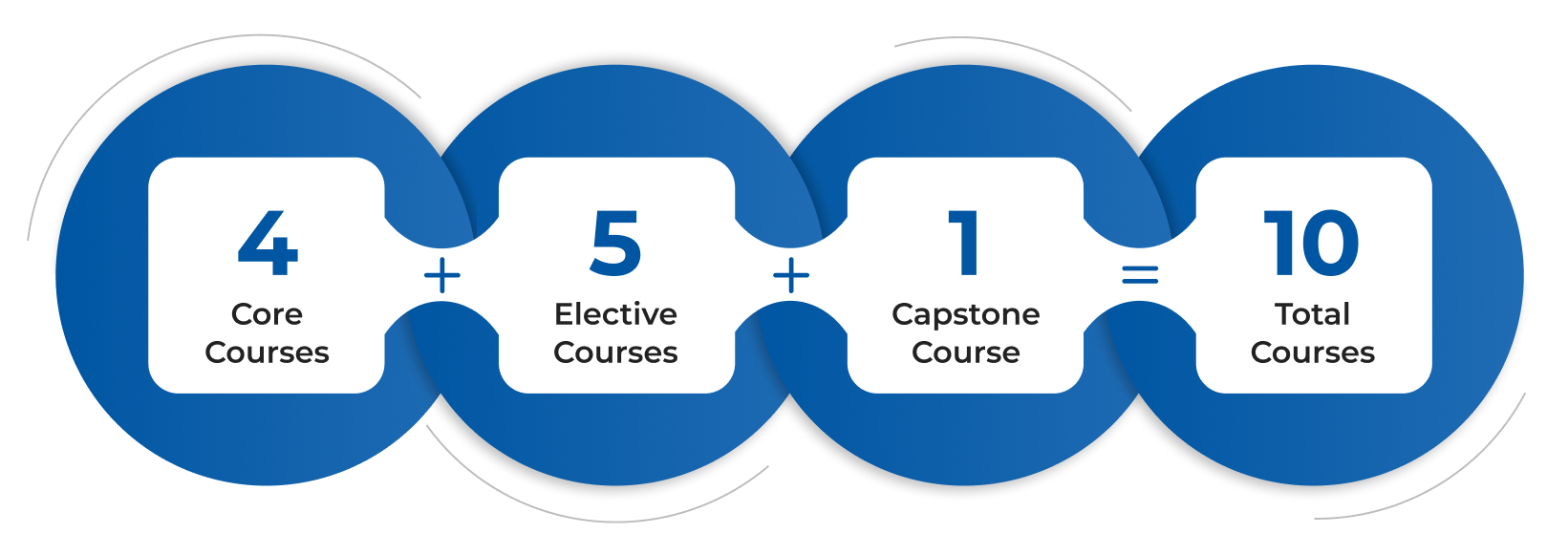


Remark: Not all the courses listed will necessarily be offered each academic year and the listed courses are subject to further adjustments.
Course Exemption
Course exemption of up to two core courses, except the capstone course, may be granted (normally by examination) if candidates:
1. Can produce evidence, such as transcript and course syllabus, that a course is equivalent in content to another course taken elsewhere for which a satisfactory grade has been obtained; or
2. Are holding relevant professional qualifications which were obtained before admission to the curriculum.
No credits will be given for the exempted course and candidates shall be required to take an approved alternative course of the same credit value.
Applications for course exemption are subject to the approval of the Master of Science in Marketing Programme Director and committees concerned.
You can take up to two electives from the Master of Accounting Analytics, Master of Artificial Intelligence in Business, Master of Economics, Master of Finance, Master of Finance in Financial Technology, Master of Global Management, Master of Science in Business Analytics, Master of Science in Marketing, Master of Sustainable Accounting and Finance, or Master of Wealth Management programme at HKU. Enrollment in electives from other programmes is subject to seat availability and approval by the Programme Directors concerned based on your profile, capabilities and performance in the MAcct programme.
Since enrollment in other taught postgraduate electives is not guaranteed, you should always choose four MAcct electives during the course enrollment in our programme. Course enrollment results of other programmes may only be confirmed after that course has started. If your enrollment is successful, you can drop the MAcct elective(s) and enroll in the other taught postgraduate elective(s).
It is your responsibility to make sure you obtain 72 credits to fulfill the graduation requirements and there is no overlapping of classes and exams in courses from different programmes.
*The list of available electives from other programmes may have prerequisite requirement(s) and is subject to change for future intakes.
Remark: Not all the courses listed will necessarily be offered each academic year and the listed courses are subject to further adjustments.
Students who choose to graduate with the Artificial Intelligence (AI) stream are required to take a minimum of 1 course from AI Methods electives and a minimum of 1 course from AI Applications electives.
AI Methods Electives (Minimum 1)
This course focuses on marketing strategies in the fastest growing market in the world, China. It covers a full range of topics including key market knowledge in China, including characteristics of consumers, city markets in China and unique marketing strategies for firms operating in China. It provides participants with a fundamental, current and multi-dimensional understanding of China so as inspire them and on insights and complexity in managing marketing in this vast and ever-changing marketplace. Substantial cases of marketing strategies adopted by international corporations in China will be thoroughly examined. Selective Chinese enterprises will be studied in the context as a market force that contributes to the intensity of the market competition of domestic enterprises or multinational corporations that have an interest to learn more about China and the China market.
The ability to manage people is a critical managerial skill. All managers have to manage people – they have to motivate and discipline followers, to maintain their commitment, and to coordinate them in a group setting. The core objective of this course is to expose students to major concepts and theories for understanding and managing human behavior in the workplace, which is important for both the short-term and long-term viability of any organization today. Upon finishing this course, you will gain a better understanding of how individuals, teams, and organizations function, and, more importantly, how to manage social relationships at work and motivate employees to dedicate full efforts to their jobs for reaching their personal and organizational goals.
The course is flexible in content that tailored to the expertise of visiting faculty members. It is designed to supplement gaps in knowledge in marketing strategies that students may have. It covers a range of potential topics that include pricing, distribution, retailing, brand acquisition and social issues in marketing. The pedagogy would be similar and at a high quality level commensurate of other electives in the programme. It covers the theory framework, best firm practices and failures, key topics of interest, social and ethical issues. Cases, cutting-edge knowledge and real-life examples will be used extensively.
This course is designed to provide students an opportunity to acquire first-hand knowledge of international marketing management. Experiential learning and knowledge exchange will be applied throughout the study field trip to develop students’ understanding of international marketing environment in a different cultural context, help them construct a global perspective, provide them with the opportunity to analyse a business organization of their interest, and to apply and integrate the marketing concepts they have learnt during their studies in the programme. Firm visits and cultural related activities will be arranged during the study field trip to arouse students’ awareness in cultural diversity and enhance their understanding of how culture can impact international marketing strategy.
This course examines Data & AI Transformation from a strategic, organizational, and leadership perspective. It explores how firms move beyond isolated AI use cases to build enterprise-wide capabilities that integrate traditional analytics, Generative AI, and agentic AI. Rather than focusing solely on technical implementation, the course emphasizes how organizations align business strategy, governance, talent, risk management, and technology architecture to unlock sustainable value from AI investments. Students will critically evaluate both the opportunities and limitations of AI technologies — including issues of scalability, data governance, hallucination risk, and operational integration.
Consumers do not always make rational and predictable decisions based on the information provided by firms and retailers. A deep understanding of consumer psychology will enable you to better predict consumers’ behavior in the marketplace and also develop important skills to influence consumers and make effective business decisions. This course intends to provide hands-on experiences applying knowledge about consumer behavior to identify important problems in real business cases and practices, analyze available data, and provide insightful recommendations.
This course provides a comprehensive examination of China’s business environment and the intricate capital markets. China's capital markets have undergone a remarkable transformation over the past few decades, transitioning from a closed system to one that is increasingly integrated with global financial markets. The first part of this course guides students to explore China's economic policy framework, analyzing the design, implementation, and outcomes of key policy initiatives that have shaped the business environment of the world's second-largest economy. The second part of this course leads students to study the practical aspects of China's capital markets, including the stock and bond markets, the banking system, the investment with commodity and currency, the derivatives markets, and corporate governance issues in China. Students will gain valuable insights into the unique characteristics that shape China's financial markets, institutions, and regulatory frameworks. Students will engage in case studies, group discussions, and individual assignments to deepen their understanding of the complexities involved in navigating the Chinese financial system. The course aims to empower students to develop their own analytical frameworks for assessing financial opportunities and challenges in China, equipping them for successful careers.
This course introduces artificial intelligence from a managerial, organizational, and applied perspective, with particular emphasis on its implications for business strategy, innovation, and entrepreneurship. It helps students build a practical understanding of AI concepts, tools, capabilities, and limitations, and then moves to the application of AI across business functions, industries, startups, and enterprise settings. The course is organized into topics across six modules: AI foundations and literacy; AI tools, workflows, and product logic; functional and industry applications; AI strategy and business model innovation; work redesign, organization, and leadership; and AI ethics, governance, risk, and future careers. This course does not focus on the technical details or theoretical aspects of AI. Instead, this course places particular emphasis on how AI is reshaping competitive advantage, business models, innovation pathways, venture creation, work design, and the capabilities required of future founders, managers, and professionals. Rather than training students to build AI systems themselves, the course prepares them to identify AI-enabled opportunities, evaluate new venture ideas, understand how AI can be embedded into products and workflows, and participate in AI-driven business transformation in future professional settings.
This course provides HKU Master’s students with a comprehensive and academically grounded understanding of global business environments, with a particular focus on Europe as a complex institutional, regulatory, and innovation-driven context. Anchored in Barcelona, the course integrates institutional analysis with applied learning in multinational and cross-cultural settings. Experiential learning is central to the course design, with company visits (e.g., leading technology firms, multinational corporations, and international firms operating in Europe), practitioner-led sessions, and interactive workshops forming a core part of the learning experience.
This course prepares HKU Master’s students to analyze, design, and develop AI-enabled ventures across startup and corporate contexts. It integrates strategic, analytical, and managerial frameworks with hands-on project work, enabling students to identify high-impact opportunities, design AI-native products, and construct evidence-based investment cases. Set within the broader transformation of business driven by artificial intelligence, the course emphasizes an “AI-first” approach to value creation, competitive strategy, and organizational innovation, with consideration of ethical and regulatory implications in global markets. Structured around key stages of the AI venture lifecycle — opportunity identification, product and system design, and investment readiness — the course combines conceptual learning with applied team projects, including no-code prototyping and venture development. Project scope is calibrated to ensure feasibility within the course duration. By the end of the course, students will have developed a functional prototype and a well-supported venture proposal.
AI Applications Electives (Minimum 1)
Up to two electives may be chosen from other taught postgraduate curricula offered by HKU Business School under the advice and approval of the Programme Directors concerned. Please refer to section at the end of this page for further details.
Not all of the courses listed above will necessarily be offered each year and the above list is subject to further adjustments.
Students who choose to graduate with the Strategic Marketing Stream are required to take a minimum of 3 courses from Strategic Marketing Stream electives.
This course is designed to help students acquire the necessary knowledge and skills to achieve service excellence in an organization. The course materials are equally applicable to organizations in service industries (e.g., banks, transportation companies, hotels, hospitals, educational institutions, professional services, telecommunication, etc.) and to organizations that depend on service excellence for competitive advantage. It considers service excellence as a corporate strategic vision and views effective service strategy from an integrative perspective that covers customers, employees, and operations. The course covers: understanding and managing customer expectations and evaluations of services; designing services that meet or exceed customer expectations; delivering and performing quality services through people and operations; pricing of services; managing customer complaints and service recovery; and building & managing customer relationship. Students will also learn effective services marketing and management tools such as service audit through gap analysis, service quality survey, customer satisfaction survey, and service blueprinting.
This course aims to help students gain an overall understanding of how to develop and manage innovations and new products. The course introduces theories of diffusion of innovations, determinants of successful and unsuccessful new products, and consumer perceptions of innovations and new products at different levels of innovativeness. Building on these theoretical perspectives, the course further introduces a systematic new product development (NPD) process from idea generation to concept testing. Students will learn and apply qualitative and quantitative techniques related to innovation and new product development and management in this course.
This course is aimed at bridging the academic world and the business world. Indeed, “branding” is an extensively researched topic and also a day-to-day management subject. Throughout the course, the concept of branding will be thoroughly examined in a holistic manner. The contemporary literatures on branding strategy will be frequently referenced, balanced by an interpretation of the instructor’s practical experience. Case studies from a global as well as Asian perspective will be cited in order to provide students with relevant insights to brand management in their work place. This course combines the most critical theories as well as the most current marketing topics including “branding in the digital age” and “brand management during economic turmoil” and “CSR and sustainability”.
This course approaches the integrated marketing communication (IMC) as a cross-functional process for creating profitable relationships between customers and corporations. It focuses on how firms can strategically design and execute messages to consumers and general public. It also examines ways for firms to engage and encourage dialogues with consumers through different digital media. Participants will learn how best to integrate marketing communication elements (advertising, social media, public relations, sales promotion, event marketing, direct marketing, and selling) to enhance brand loyalty and advance firm successes. It will cover theoretical framework, firm practices as well as cases to help participants learn how to develop effective IMC plans.
This course provides students with a systematic and step-by-step guide to the application of theoretical frameworks to the effective design and implementation of global marketing activities across national boundaries and within foreign countries. The course shows students how they can easily make use of publicly available databases to understand different markets in a global context. Without the requirement of any prior sophisticated knowledge in statistics, students will learn how they can gain deep insights into global marketing decision making through easy-to-implement data search and basic data analysis. Real-world marketing cases and examples will be discussed to help students understand how they can make theory-inspired and data-informed decisions regarding market selection and marketing mix design.
Entrepreneurship is both an exciting and a big topic. This course aims to provide an overview of the entrepreneurship process by focusing on new venture creation from idea generation, building compelling business model and entrepreneurial marketing. While traditional marketing is defined by customer orientation, entrepreneurial marketing is defined by customer development and innovation orientation. Students will learn how entrepreneurs should interact with potential customers with activities like designing minimum viable products and conducting customer development and validation process.
The FinTech movement is considerably changing the financial sector. In particular, there has been considerable disruptions in retail banking & consumer finance coming from technology companies, the “TechFins”, and from traditional financial institutions, the “FinTech”. These efforts have helped to give access to financial services in un- and under-banked consumers, provided novel products and services to mature markets, and helped build financial access across borders. This course looks at how technological advances and regulatory policies have created opportunities in different markets, with an emphasis in China, Asia, ASEAN, and the region. We will discuss how retail banking & consumer financial products and services including microfinance, peer-to-peer lending, crowd-funding, digital payments, digital banking, and insurance are being affected, and, at times, disrupted, by Big Data, AI, blockchains/cryptocurrencies, and smartphones. Furthermore, the course looks at how these omni-channel and technology-based approaches are fundamentally changing consumer behavior of banked, un-bankable, and under-banked consumers. We will also look at the direct and unexpected societal and economic impact of these innovations. Students will get hands-on experience with credit scoring using non-traditional data. Finally, teams will create their own blockchain of their own design.
The strategic management of customer relationships is a critical activity for all enterprises. In this course, an understanding of customer equity in various parts of the enterprise will lead to customer management strategy development incorporating elements of segmentation and differential marketing (data-driven marketing), key measurement areas such as churn rate, the use of customer satisfaction survey and Net Promoter Score (NPS), and determining Customer Lifetime Value (CLV). Further sessions will explore the profitability of customer retention, the effectiveness of win-back, and modern customer management methods and tools with the associated data privacy and security requirements. This course will also include the leadership elements required to develop an enterprise-wide customer-centric approach to maximising customer value.
More than ever, corporations are engaging the larger community with policies and procedures in pursuit of corporate social responsibility (CSR) and environmental, social and corporate governance (ESG). Using a case-based approach, this course will focus on the experiences of companies that have used such strategies successfully – and unsuccessfully. Students will analyse different models of social purpose, examine case studies to test assumptions and find the winning solutions for companies’various stakeholders. By studying the criteria and standards of evidence developed to measure the true social impact of an organization, they will identify the Sustainable Development Goals (SDGs) and Environmental Social and Governance Criteria (ESG) to accurately assess an organisation’s inputs, outputs, and impact. Students completing this course will have a clearly defined understanding of purpose in an organization and how to contribute to successful implementation.
This course examines the opportunities and challenges that contemporary managers confront when conducting business across national borders. It addresses the complex environment of international business with respect to economic, social, cultural, political, and legal institutions. Special attention will be given to examine how these institutions shape business operations in the global market. Throughout this course, we will also highlight some of the drivers of global macroeconomic development and its impact on international business.
This course focuses on marketing strategies and emerging issues in platform business models and the sharing economy. It covers the special features, pricing, customer acquisition and management, trust building, ecosystem and governance of such business models. The course also analyzes the business models of representative firms in several key sectors — lodging, ride-hailing, e-commerce, office sharing, and online travel — and the future trends of platform business models and the sharing economy. In addition to qualitative analysis, this course also discusses how data analytics are applied in these businesses and the special skills needed for such business models. This course combines lectures, HBS case studies, hands-on exercises, and student group project presentations.
This course provides a comprehensive understanding of B2B marketing strategies and tactics for MSc Marketing students. Through a mix of lectures, case studies, discussions, and assignments, students will gain the knowledge and skills to develop and implement effective B2B marketing campaigns.
Corporate Communications has become an indispensable function of modern organizations. Developed and conducted by an award-winning industry veteran, this Corporate Communications course is designed to provide students with both a strategic framework and hands-on understanding in what it takes to manage an organisation’s corporate reputation.
Through a combination of case analysis, readings, discussions and scenario responses, students would be able to gain a solid understanding of the latest Corporate Communications function and build the essential corporate communications skills relevant to the 21st century world.
This course is designed to equip students with the knowledge and skills necessary to navigate the complex landscape of public affairs and corporate communications within the public sector. It emphasizes the critical role of effective communication in areas such as policy influence, public service operations, reputation management, and crisis management during fast-paced situations.
Sport not only can boast international mass appeal drawing global audiences and participants, but also foster cultural exchange and business collaborations among people or organizations of diverse culture and business nature. While many organizations have integrated ‘sport’ or ‘athlete’ in their strategic marketing/ branding strategies or ESG programmes, sports world provides a perfect platform for students to put their marketing knowledge into practice. This course will share numerous examples and cases of sports marketing and business collaboration aiming to provoke insights and creative ideas for the development of marketing strategies when students are working with local or multinational corporations.
This course dives deep into the increasing important creative and entertainment business. We will explore the marketing strategy contributing to the success of creative products, including effective marketing, a unique selling proposition, and psychology of consuming entertainment products. More importantly, we will reveal the blockbuster strategy that have been widely used in creative industries (e.g. music and films), discuss in depth how the technology and innovations have shaped and challenged the global creative business, and generalize the insights into other industries, such as retailing and social media.
Domain Expertise Electives (Minimum 1)
The course will focus on innovations in both analytics and technology-driven business models. The course contents will cover contemporary topics on innovation strategies, business analytics, platform economics, business model development, disruptive technologies, digital experiments, cryptocurrency, information privacy, etc. In particular, students will learn how to identify innovation opportunities and manage innovation processes. They will also be able to master the ability to develop digital business models.
The goal of this course is twofold. First, it aims to equip students with hands-on skills in using spreadsheet modeling and other analytical tools to solve investment and trading problems in finance. Excel spreadsheet and VBA will be used as the primary tool of developing analytics, e.g., building term structure models, pricing options by simulation, etc. The other objective is to introduce Financial Technology (“FinTech”)—one of the most promising sectors in financial industry.
FinTech start-ups capitalize on technological innovations to provide better financial services with enhanced efficiency. We will have an overview on the active product areas in FinTech, including digital wealth management, payment solutions, and capital-raising. Digital currency and the closely related technology (blockchain) will also be highlighted.
Social media and digital advertising have become important sources for understanding the stakeholders of an organization, such as customers, suppliers, and pressure groups. Analysing data from these sources can reveal useful insights for strategic planning and achieving business objectives. This course is designed to help students develop strategies to create and extract value from these phenomena.
Topics will cover strategic and operational issues pertaining to social media and digital marketing initiatives, metrics to capture and evaluate outcomes, and predictive analysis to link chatter to business performance. Techniques covered will include social network analytics, SEO/SEM, experimental design, text analytics, and sentiment analysis.
The course is designed to prepare students to apply business strategies, analytical methodologies and information technology in supply chain management. Traditionally industries have focused on operation evaluation and performance improvement of manufacturing process; however, the deficiency of supply chain coordination results in severe downgrade of business competitiveness.
With advent of information technology, computers not only improve manufacturing operation and management, but also enhance strategic decision making as well. This course focuses on the systems approach to planning, analysis, design, development, and evaluation of supply chain management.
Students who choose to graduate with the Quantitative Marketing Stream are required to take a minimum of 3 courses from Quantitative Marketing Stream electives.
Consumers leave a massive digital trail through mobile devices, social media, transactions, and information communication technologies (ICT). Companies and organizations in all industries face this plethora of consumer data and are looking to turn it into value through advertising and better products and services. This course looks to introduce students to the various methods and strategies to make sense of the data. We will cover topics including advance and Big Data predictive analytics, machine and deep learning, text mining and analysis, image and video analysis, and geospatial and mobility analytics. Students will have real hands-on practice exercises with these methods, learn how to generate insights from large and unstructured data, and build an understanding of its strategic relevance in creating sustainable competitive advantage. The course will also bridge these technical methods with social sciences and consumer behavior. We will cover a number of case studies, with an emphasis on Asia, in sundry industries including retailing and e-ommerce, advertising, FinTech and retail financial sectors, telecommunication, and transportation and smart nations. Finally, we will discuss the interwoven dependencies on the legal frameworks with Big Data, including issues relating to privacy, regulations, rights, consumer reactions and adherence to data legislation in different markets.
This course introduces the foundations of quantitative analysis for participants in online markets. Students learn to apply AI, algorithms, and statistical methods to create, evaluate, and interpret digital content—and to translate findings into actionable insights for sellers, buyers, platforms, and public policymakers.
The course spans key topics such as large language models, recommendation systems, discrete choice and machine-learning approaches, coding, data visualization, and online experimentation. Throughout the term, students are encouraged to work hands-on with multiple AI models, compare their strengths, and use them to solve real-world problems.
This course introduces simulation models to analyse business processes and solve practical problems. Students will gain basic knowledge such as Monte Carlo simulation and discrete event simulation first, and then be introduced to a simulation package that can be used to evaluate business process performance and, more importantly, facilitate decision making process.
Profitable pricing is one of the most critical, but often the least understood managerial decisions. Among all the marketing mix, pricing is the only element that produces revenue. Firms rely on pricing to harvest its effort to create value for consumers, yet managers often make mistakes in their pricing decisions. Oftentimes, pricing is too cost-oriented, unresponsive to market change, and inconsistent with the product position. This course covers both the economic theories of pricing and the analytical tools for formulating effective pricing strategies. The course also discusses both commonly used pricing tactics and some of the newest pricing practices. The course is highly applied and prepares students for pursuing a career in marketing, consulting, and finance.
This course covers the most fundamental quantitative skills in marketing. It includes types of quantitative marketing data and appropriate models to analyze different types of data. It applies SAS and SQL programming languages to organize and analyze marketing data and to estimate marketing models. The course will cover models on major marketing decisions on whether to buy, what to buy, how much to buy, and when to buy, both at the aggregate and individual levels. Each model will be analyzed with real-world data together with real-world applications.
This course is designed to provide students with a deep understanding of social media marketing theories, strategies, analytics, and best practices. The course covers a wide range of topics, including social media ecosystem, media types, social advertising, influencer and viral marketing, content creation and curation, short video and livestream commerce, and attribution models. Students will also explore various types of data found on social media, such as textual data, multimedia data, user interaction data, clickstream data and metadata. They will also learn various data analysis techniques, including clickstream data analysis, text analysis, multimedia analysis, and basic machine learning applications.
This course offers an in-depth exploration of cutting-edge A/B testing techniques used in the daily operations of major technology firms, driving product innovation. We will also delve into key insights and common challenges encountered in practical scenarios. Topics covered include the statistical underpinnings of experiments, experimental design, methods for analyzing experimental data, the integration of A/B testing platforms and culture in organizations, recent advancements in A/B testing, and the principles of observational causal studies. Given the role of A/B testing as a pivotal tool in product management, this course emphasizes its application in this significant context. Participants will gain hands-on experience in conducting and analyzing online experiments using programming languages such as Python, complemented by assignments and an extensive course project.
Note: This course is not open to candidates who have taken or are taking MSBA7025 or MSBA7037.
Python is a powerful and versatile programming language renowned for its simplicity and readability. This course aims to equip students with fundamental programming skills using Python. It covers a wide range of topics, including data types, operations, iterations, string operations, functions, data organization, data analysis, and data visualization. The course is designed to accommodate students with no prior programming experience, making it accessible to beginners as well.
This course requires no prerequisites or technical background and is tailored for students who aspire to learn about the “full-stack” of GenAI, i.e., from its development, application and deployment to its implications in real-world settings. The curriculum begins with a comprehensive overview of the infrastructure (or development) of GenAI, covering basic concepts of software, hardware, data, and networks of GenAI, and compares these elements to human cognition, brain and psychology. Students will get to learn and apply these concepts through a proprietary in-class exercise developed specifically for this course, called “Beat the Bot”.
This master-level course is designed to equip students with the knowledge, skills, and tools required to harness the transformative power of artificial intelligence (AI) in marketing. As AI continues to reshape industries, marketing professionals must understand how to leverage AI-driven technologies to improve customer engagement, optimize campaigns, and drive business growth. This course provides an introductory overview of AI concepts, techniques, and applications within the marketing domain, emphasizing both theoretical foundations and practical implementations.
Note: This course is not open to candidates who have taken or are taking MAIB7009.
You can take up to two electives from the Master of Accounting, Master of Accounting Analytics, Master of Artificial Intelligence in Business, Master of Economics, Master of Finance, Master of Finance in Financial Technology, Master of Global Management, Master of Science in Business Analytics, Master of Sustainable Accounting and Finance or Master of Wealth Management programme at HKU. Enrollment in electives from other programmes is subject to seat availability and approval by the Programme Directors concerned based on your profile, capabilities and performance in the MSc(Mktg) programme.
Since enrollment in other taught postgraduate electives is not guaranteed, you should always choose five MSc(Mktg) electives during the course enrollment in our programme. Course enrollment results of other programmes may only be confirmed after that course has started. If your enrollment is successful, you can drop the MScMktg elective(s) and enroll in the other taught postgraduate elective(s).
It is your responsibility to make sure you obtain 60 credits to fulfill the graduation requirements and there is no overlapping of classes and exams in courses from different programmes.
*The list of available electives from other programmes may have prerequisite requirement(s) and is subject to change for future intakes.
Up to two elective courses may be taken from other taught postgraduate programmes offered by the School, subject to availability and review by the Programme Director based on students’ profile, capabilities, and performance in the Master of Science in Marketing Programme.
Remark: Not all the courses listed will necessarily be offered each academic year and the listed courses are subject to further adjustments.
As a capstone course, this course integrates knowledge from various marketing courses. It is aimed to provide students with advanced knowledge and experience for the design of effective marketing strategies from a general management perspective. It involves advanced concepts and tools useful for the development of marketing strategies and tactics. This course adopts a teaching philosophy of “learning by doing” and students’ marketing strategic thinking and decision-making skills will be enhanced by participation in marketing strategy simulations.
This course aims at bridging academic learning with real-world applications, equipping students for their future careers through practical problem-solving. This course allows students to integrate and apply the knowledge and techniques that they have learned in previous courses in a business project. Teams of students will carry out business projects using real-world data and have the opportunity to be involved in different stages in a business project, including project planning and management, strategy setting, model building, data analysis and interpretation, and result presentation. In the process, students will become familiar with the use of analytics tools and managerial skills in business projects. This course will provide a dynamic and student-centered experience that fosters real-world engagement and career readiness.
Note: This course is not open to candidates who have taken or are taking PMSC7902. The course code of this course has been changed from MSMK7902 to PMSC7901, and this course is not open to candidates who have taken MSMK7902.
Class Profile
Previous Employers
- Beijing Radio & Television Station
- China International Capital Corporation
- Deloitte
- ELLE
- EY
- Ferrari
- Hero Entertainment Co., Ltd.
- Huawei
- Lenovo
- McKinsey & Company
- Ogilvy
- Pfizer Korea
- Publicis Groupe
- Sanhua Holding Group
- SHINE
- Shiseido
- STATE GRID Corporation of China
- Tencent Music Entertainment Technology (Shenzhen) Co., Ltd.
- Vivo Mobile Communication Co., Ltd.
- Wang Lao Ji One Health Industry Co., Ltd.
- YOOZOO Games